
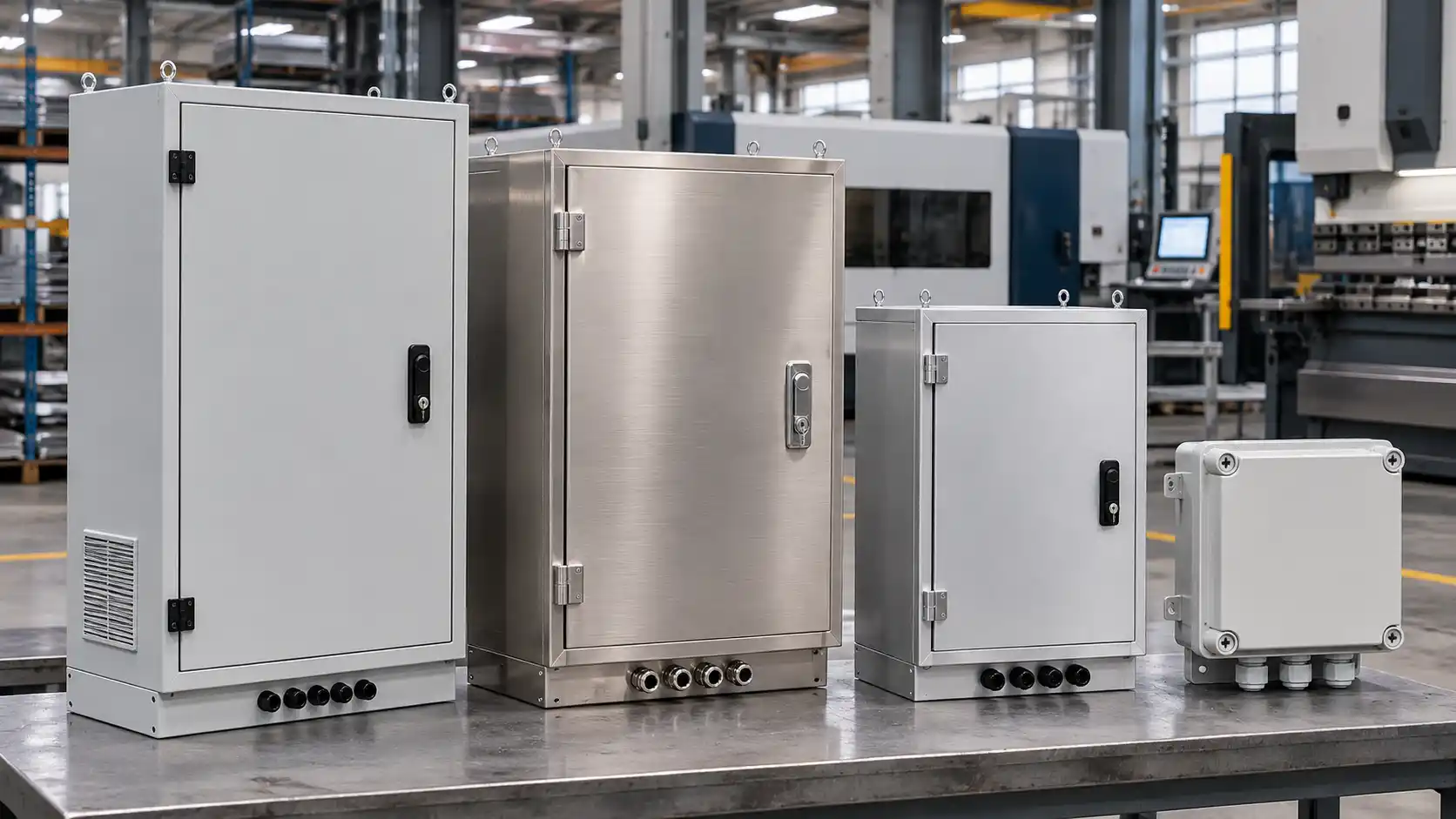
Material choice is yet another significant factor in selecting the electrical enclosure. This section is expected to protect the electrical equipment from elements such as dust, moisture, impacts, and others that exist on the site. Also, the type of material that will be used to construct the enclosure affects characteristics like corrosion resistance, weight, and maintenance of the enclosure. Industrial panels are constructed using mild steel while stainless steel is used when corrosion and cleaning resistance is desired.
Aluminum is a material that can be used as a light alternative and sometimes even plastic and non-metal materials can be useful in case electrical and chemical resistance is required. This information helps in making the right choice of electrical enclosure materials.
Electrical enclosures do not refer to mere enclosures of equipment in electrical boxes. The enclosure is the shield between the sensitive equipment and the outside environment. This means that the choice of material depends on the kind of external environment.
There are some things like mechanical properties, corrosion properties, temperature, moisture, and cleaning that should be considered when choosing an enclosure material for an industrial electrical enclosure. What works best in a dry factory setting may not work well in a coastal environment or a chemical plant.
Electrical enclosure material can make sure that there are no maintenance issues and can also ensure that the enclosure remains intact through its service period.
Material Used for electrical enclosures is chosen depending on various factors like the installation area, degree of protection needed, budget, and the purpose of the installation. Electrical enclosures types which are used in different materials, each with different strengths of durability, corrosion, and insulation. Commonly used ones are:
Mild Steel Electrical Enclosure is one of the common types of enclosures for industrial control panels, equipment, and electrical distribution systems. The metal is quite strong mechanically and also is less costly than stainless steel.
Powder coating is often done to increase durability and resistance of a mild steel enclosure to typical environmental factors. This makes the metal good for use in many indoor industrial applications. However, the metal can rust under moist and harsh environmental conditions unless proper preparation of its surface is done. Thus, the quality of surface preparation and coating is very important in this case.
For general Metal Electrical Enclosure used in controlled environments, the use of mild steel becomes a practical choice.
Stainless Steel Electrical Enclosure is normally selected when corrosion and durability are more important. This material performs effectively in moist and wet environments that regular steel coated with paint may require more maintenance in.
This kind of enclosure is most commonly used in the food-processing, pharmaceutical, chemical industries and many others where cleaning is essential. The surfaces can also clean easily. Stainless steel is more expensive than mild steel but may be necessary in certain conditions. The right grade of stainless steel must be selected depending on the environment.
In the case of a tough Industrial Electrical Enclosure application, stainless steel provides a better option if chosen correctly.
Aluminium Electrical Enclosure becomes helpful in case low weight is a key factor. Aluminium is easy to handle and forms natural oxide film which gives corrosion resistance.
It can also assist in thermal dissipation which may become necessary for some electrical and electronic applications. Aluminium enclosures are available in electronics, telecommunication, instrumentation, and industrial systems. The metal is relatively easier to transport and install in cases of large and frequently accessed enclosures. Nevertheless, aluminium cannot give mechanical characteristics similar to those of thick steel in every application.
Thus, an aluminum electrical enclosure box becomes helpful in case all three factors should be taken into account at once.
Non-metallic electrical enclosures are normally produced from materials like polycarbonate, ABS, or fiberglass-reinforced plastic. Such types of enclosures offer electrical insulation, and they may be quite effective in cases where metallic enclosures are not needed.
Most of the plastic-based enclosures are light and have resistance against water and some chemicals. Such enclosures may be very effective when used for control, instrumentation, outside electrical, and small electrical purposes.
However, it is necessary to bear in mind that there exist some variations between different plastics concerning their strength, thermal properties, and chemical resistance. Hence, it is required to choose a Plastic Electrical Enclosure considering the conditions under which it will operate.
The comparison of electrical enclosures is a great example, which reveals the main differences between some of the most popular electrical enclosure materials in relation to their price, strength, weight, and corrosion resistance.
| Material | Corrosion Resistance | Strength | Weight | Typical Use |
|---|---|---|---|---|
| Mild Steel | Moderate with suitable coating | High | Higher | Industrial panels, machinery, control panels |
| Stainless Steel | High | High | Higher | Food, pharma, chemical, and harsh environments |
| Aluminium | Good | Moderate | Lower | Electronics, telecom and lightweight systems |
| Non-Metallic | Varies by material | Moderate | Low | Insulated, chemical and selected outdoor applications |
For the given electrical enclosures comparison, mild steel is a feasible option for general indoor industrial use. The use of stainless steel is appropriate where there is the presence of moisture, chemicals, and washdown. When weight and corrosion resistance are the two major factors considered in choosing the material, aluminum is the better option.Non-metallic electric enclosures can be used for electrical and chemical insulation.
Electrical Enclosure Selection must always start with the existing environment for installation and not merely the cost involved. For industrial purposes, some of the considerations that need to be taken into account are the environment in which it will operate, the corrosion conditions, mechanical protection, weight, maintenance needs, and the equipment installed in the enclosure. Mild steel can be a good choice for normal indoor use, while stainless steel would be appropriate in an environment with corrosion or washdown. Aluminum could be considered if weight is an issue, whereas non-metallic materials should be used where there are issues of electricity and chemistry.
Installation environment is one of the essential considerations in choosing an Industrial electrical enclosure. The conditions faced by Indoor Factory Panels may be very different from those encountered by an Outdoor electrical enclosure that is subjected to rainfall, sun exposure, and temperature changes. Other factors such as humidity, dust, sea air, fumes, and washdown could also influence material selection. Although the range of materials that can be used is broad when the environment is relatively clean and dry, there should be appropriate material for tough industrial environments.
Corrosion is one of the major factors that influence the selection of materials for enclosure. Mild steel can serve well with an appropriate coating; however, for a situation where the enclosure is exposed for a long time to moisture or some corrosive agent, then some other material might be used.
A Corrosion Resistant electrical enclosure constructed from stainless steel, aluminum, or any other suitable non-metallic material might be selected depending on the extent of the exposure.
Consider the amount of protection that is needed against the physical effects. Panels mounted near machines might face the problem of vibrations, impact, and frequent handling. A strong Electrical Equipment Enclosure should have sufficient strength in order to accommodate the equipment as well as mountings installed inside it.
With regard to mechanical environments, the use of a Metal electrical enclosure design will offer the necessary stiffness needed.
The Electrical Enclosure Selection must also consider the parameters of weight, installation requirements, and maintenance. This is a critical factor when the enclosure is heavy, mobile, and installed in a location which is not strong structurally. The fact that aluminum and nonmetallic materials are used makes the enclosure less heavy as compared to the metallic enclosure.
Also, maintenance needs have to be considered. Corrosion-resistant materials will make cleaning the enclosure easier, especially where cleaning is performed regularly. Choosing the right materials would make the installation and maintenance of the enclosure easier.
The ideal Electrical Enclosure Materials are those that take into consideration the environment of installation, the specifications of the electrical equipment being used, and the level of protection needed rather than the ranking of the materials themselves.
The final electrical enclosure will depend on the surroundings, size of the equipment, and ratings of protection.
Not all standard sizes of enclosures can fit all types of electrical installations. Industrial projects may require particular dimensions, mounting, cable entries, doors, cutouts, ventilation or internal mounting plates.
Custom electrical enclosure design can be done according to equipment and panel design. Selection of material, thickness, finish, and protection depends on the particular application. Sheet metal electrical enclosure is a good choice for many industrial applications that have particular dimension and fabrication needs.
In the case of industrial installations, it is essential to coordinate with the Electrical Enclosure Manufacturer to make sure that everything is fabricated, cut, mounted, and finished correctly.
Fabtro Technologies provides sheet metal fabrication services for industrial purposes like enclosures. Customers have the option of giving requirements regarding sizes, material types, finishes, cutouts, and other relevant aspects.
Electrical Enclosure selection plays a crucial role in ensuring safety and effective working of the electrical appliances. Material selection is done after analyzing the following aspects - location of installation, corrosion-resistance needed, mechanical requirements, weight, maintenance needs, and customization needs.
When choosing industrial electrical enclosure, emphasis should be made on performance and protection, rather than only cost consideration of the enclosure. Each mild steel, stainless steel, aluminum, and non-metallic materials has its own strengths in a particular application.
|
Fabtro Technologies provides services for sheet metal fabrication in industrial sectors, which help buyers design their enclosures according to their dimensions and applications. |
There are many electrical enclosure materials such as mild steel, stainless steel, aluminum, polycarbonate, ABS, and fiberglass among others. However, it all depends on the installation site and requirements.
The good materials for use outdoors are stainless steel, aluminum and some other non-metallic materials depending on the weather conditions and required protection.
One needs to consider aspects such as corrosion, mechanical properties, weight, temperature, moisture, maintenance and equipment inside the enclosure.
Custom Sheet metal fabrication solutions for Industrial Requirements from Fabtro Technologies include enclosures related products. Buyers may communicate about their requirements in terms of dimensions, material, finish, cutouts and other fabrication specifics.
Yes, Fabtro Technologies provides sheet metal fabrication solutions for Industrial Applications. The buyers may convey their panel configuration, dimensions, mounting requirements and finishing to discuss the solution.
It is not clear from the provided company details whether Fabtro Technologies offers any particular brands of electrical enclosure products. It is better to inquire from Fabtro Technologies regarding the brands they offer.
Convey the specific dimensions, material, sheet thickness, surface finish, mounting arrangement, cable entry points, cutouts and other specifications as per requirements.