
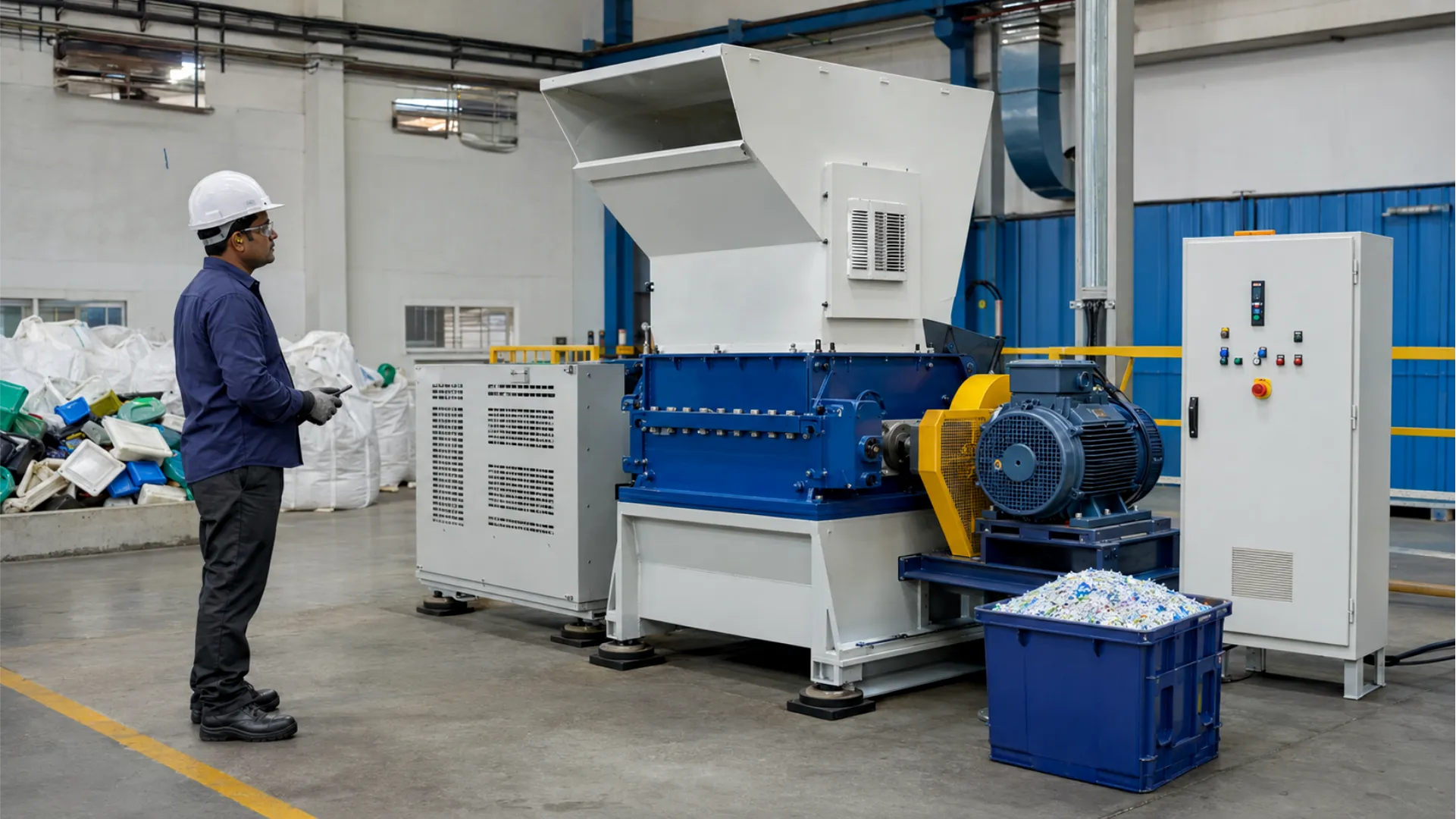
The first step in plastic recycling is efficient size reduction, which makes investing in a plastic crushing machine a must-have for plastic manufacturers, recyclers, and waste management facilities. Whether you need a small, compact unit for a modest operation or an industrial, high-capacity machine, choosing the right one isn't just about the price tag. Noise output, power usage, processing capacity, and built-in safety features all have a direct effect on productivity, operating costs, and workplace safety.
This guide walks through the key factors to consider so you can choose a plastic crusher that is reliable and delivers long-lasting performance.
A plastic crushing machine is designed to crush plastic waste into an even size, which facilitates recycling, transportation, and reuse. Built on a strong understanding of plastic materials, these machines are engineered to handle a variety of containers such as PET bottles, HDPE containers, PVC pipes, injection-molded parts, plastic films, and industrial scrap through an efficient, high-performance cutting operation backed by robust construction.
Modern plastic crushing equipment is designed to withstand tough industrial conditions, thanks to heavy-duty blades, energy-efficient motors, low-noise operation, and advanced safety features. Machines come in different sizes suited to workshops, manufacturing lines, and large-scale recycling operations alike—helping businesses increase recycling efficiency, reduce waste disposal expenses, and support sustainable manufacturing.
|
Specification |
Details |
|
Capacity |
50–1000 kg/hr |
|
Motor Power |
5–40 HP |
|
Voltage |
220V / 415V |
|
Blade Material |
High-carbon steel / D2 Steel |
|
Rotor Speed |
450–650 RPM |
|
Output Size |
8–20 mm |
|
Noise Level |
70–85 dB |
|
Safety Features |
Emergency Stop, Overload Protection, Safety Interlock, Safety Switch Device |
|
Machine Body |
Heavy-Duty Powder-Coated Steel |
|
Applications |
Glass, PET, HDPE, PVC, PP, Plastic Bottles, Pipes & Scrap |
When buyers begin comparing options, Plastic Crushing Machine price is usually their first concern—understandable, since budget often determines the shortlist. But price alone doesn't tell you whether a machine will fit your facility, comply with local noise limits, or keep your operators safe day after day.
A lower upfront cost can end up costing more in the long run through high power consumption, complaints from neighbors or regulators, or a lack of basic safety features that leads to accidents. It pays to understand what "good" looks like across these three categories before you buy.
Plastic crushing is an inherently noisy process — the mechanical shearing of steel blades through solid plastic generates significant sound. But noise output varies widely between machines, and where the machine is placed matters just as much.
What to look for:
Noise matters most for a Plastic Crusher Machine small enough for a compact shop, retail collection site, or recycling corner in an office, where there's less distance between the equipment and people nearby. In these smaller settings, a compact, lower-capacity unit is almost always the more practical choice.
The second major factor separating a good crusher from a costly one is motor power. It directly determines how much plastic the machine can process per hour and how much electricity it will consume over its lifetime.
Consider the following:
Plastic crush price is also closely tied to motor specifications—a more powerful, efficient motor tends to cost more upfront but delivers a lower cost per kg processed when the machine runs for several hours a day.
This is the area too many buyers overlook, yet it matters most once a machine is in regular use. Even the best plastic crushers involve moving parts and high-speed blades, which can be dangerous without the right safeguards in place.
Safety features to look for:
Once you factor in noise control, motor efficiency, and safety systems, it becomes clear why prices vary so widely across the market. Basic, open-frame models with standard motors sit at the lower end, while automatic, soundproof, PLC-controlled machines command the higher end.
Low-capacity, low-cost units are typically entry-level; mid-range capacity models with noise reduction and safety features occupy the middle tier; and high-capacity industrial machines with advanced control, noise, and safety systems sit at the top. This pattern holds consistently across Plastic Crush buyers' experiences and supplier quotes—machines with the strongest safety and noise-control ratings command the higher price tag, even at similar processing capacities.
The takeaway: a low price doesn't necessarily mean a good machine. Price often reflects the noise, power, and safety specifications built into the unit, but it doesn't by itself guarantee long-term value.
These are some of the points before buying a plastic crushing machine:
☐ Is the noise level rating appropriate for your installation site?
☐ Is the motor sized correctly for the material volume you actually process daily — avoiding wasted power and space?
☐ Does the machine have an emergency stop and access-point safety interlocks?
☐ Does the motor system include overload protection?
☐ Does the machine come with a warranty of at least one year?
☐ If space is limited, does a Plastic Crusher Machine small enough for your site still meet your capacity needs without compromising safety features?
Choosing the right plastic crushing machine is about more than the price tag alone. Noise output determines where and how you can run the machine. Power efficiency shapes your day-to-day running costs. And safety features keep your operators protected on every shift. Together, these three factors—not just the Plastic Crushing Machine price — determine whether a machine is a smart long-term investment or a costly mistake.
Whether you're a large-scale recycler or considering a small unit for the first time, taking the time to make an informed decision will save you money, downtime, and risk down the line.
These are the five SEO brief answers to questions that should be included for your blog titled "Choosing the Right Plastic Crushing Machine: Noise, Power & Safety Guide." These are the five SEO answers that should be included in your blog titled Choosing the Right Plastic Crushing Machine: Noise, Power & Safety Guide.
Searching for a dependable plastic crushing machine with strong crushing power, energy efficiency, and advanced safety measures? Our team can help you choose the right one based on your material type, production needs, and budget.
Call us today for a quote, to compare machine specifications, and to find the ideal plastic crusher solution for your recycling or manufacturing process.
When buying a plastic crushing machine, take into account processing capacity and motor power, noise level, security features, blade quality, power consumption, and maintenance. It's important that the right machine is available to meet your daily production requirements, is reliable and cost-efficient to operate, and helps to keep operators safer.
The level of noise directly impacts operator comfort and workplace safety. Most modern plastic crusher machines will range from 70-85 dB, which would suit most industrial settings. Enclosed and anti-vibration machines also help to minimize noise pollution, create a more pleasant working environment, and meet workplace safety standards.
The crushing capacity and efficiency of the machine are given by motor power. For small recycling applications, the lower-powered machines will do just fine; however, if you are looking to use the machine in continuous industrial applications, the higher HP machines will be more adequate. It is important to select the right motor size to maximize energy efficiency, productivity, component wear life, and long-term operating costs.
Safety features are absolutely essential for a reliable plastic crushing machine, including an enclosed cutting chamber, reinforced machine housing, overload protection, safety interlocks, and an emergency stop button. These features reduce the chance of accidents, keep operators clear of moving parts, prevent motor damage, and ensure safe and continuous motor operation in industrial areas.
Some of the parameters that affect the plastic crushing machine prices in India are listed as follows: machine capacity, motor power, blade material, automation level, noise reduction technology, and built-in safety systems. The entry-level models are appropriate for small businesses, while high-capacity industrial models with PLC controls, soundproofed enclosures, and comprehensive safety features will cost more because they offer better performance and will have a longer lifespan since they require less upkeep.